
Masonry
Masonry
Everlastic® 1320 Open Cell Urethane
Preformed Rubber Control Joints for CMU & Concrete Masonry Walls
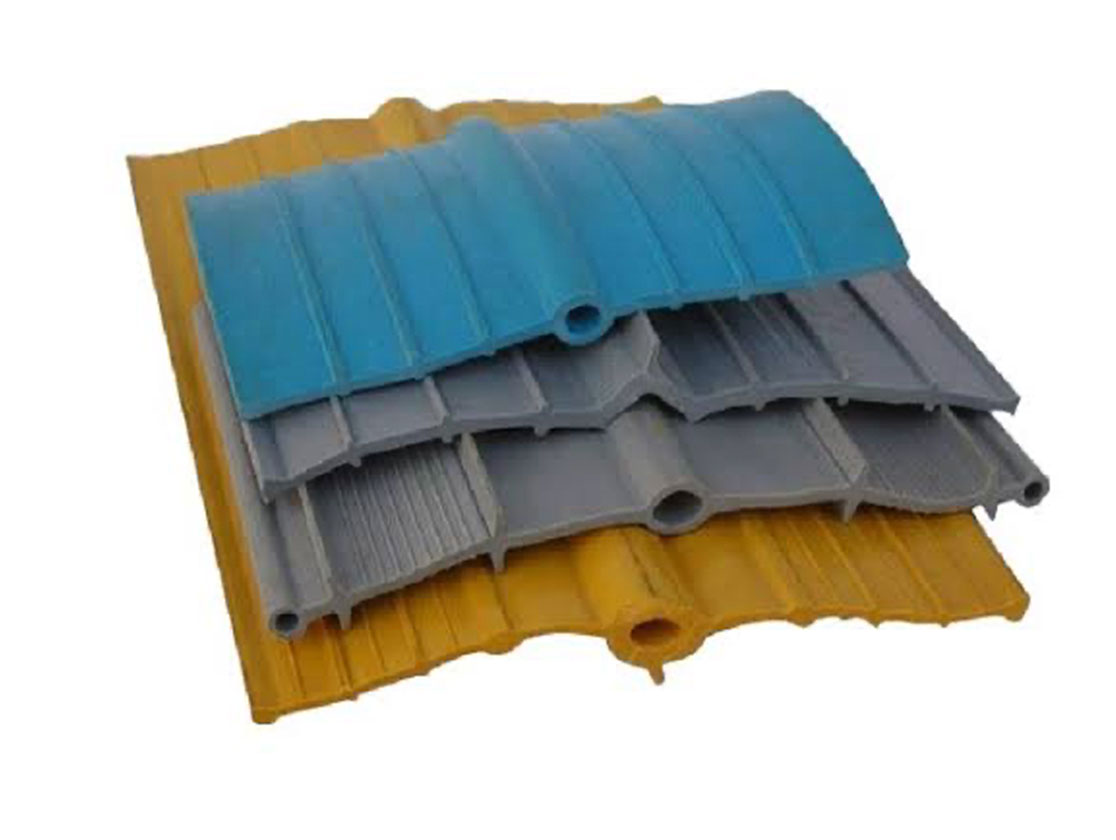
EVERLASTIC® Rubber Masonry Control Joints from Williams Products provide a durable, flexible solution for accommodating movement and helping control cracking in concrete masonry unit (CMU) walls.
Concrete masonry naturally experiences dimensional changes caused by drying shrinkage, temperature fluctuations, moisture conditions, and normal building movement. Properly located control joints divide the wall into individual sections, providing predetermined locations where movement can occur rather than allowing uncontrolled cracking throughout the masonry.
EVERLASTIC® Rubber Masonry Control Joints are installed vertically within the CMU wall to provide a flexible, resilient separation between adjoining wall sections while allowing the masonry to move as designed.
Why Are Control Joints Important in CMU Walls?
Concrete masonry units undergo movement throughout the life of a building. Without properly designed control joints, stresses can accumulate within long wall sections and around areas of stress concentration.
Control joints are intentionally incorporated into the wall to help accommodate this movement and reduce the potential for random cracking.
EVERLASTIC® Rubber Masonry Control Joints provide a preformed flexible component within the control joint assembly, helping establish a predetermined location where movement can occur.
Key Features & Benefits
- Designed specifically for CMU and concrete masonry walls
- Flexible rubber construction
- Accommodates masonry movement
- Helps control and minimize random cracking
- Provides a preformed vertical control joint
- Resilient construction for long-term performance
- Installs directly into compatible CMU configurations
- Suitable for interior and exterior masonry walls
- Creates a consistent joint configuration
- Works with backer rod and sealant at the exposed joint face
- Suitable for commercial, institutional, industrial, and multi-family masonry construction
How a Rubber Masonry Control Joint Works
A rubber masonry control joint creates a vertical plane of separation within a CMU wall.
As the concrete masonry undergoes shrinkage or other dimensional movement, the control joint allows adjoining wall sections to move independently rather than forcing those stresses to accumulate throughout a continuous wall.
Preformed rubber control joint gaskets are commonly installed with specially shaped sash-type CMU units, which accommodate the profile of the rubber control joint.
The result is a clean, predetermined location where masonry movement can occur.
Typical Control Joint Assembly
A properly designed CMU control joint can incorporate several components working together:
CMU / Sash Block → Rubber Control Joint → Backer Rod → Sealant
The EVERLASTIC® Rubber Masonry Control Joint provides the flexible preformed component within the wall.
At the exposed face of the wall, backer rod and sealant can be installed to provide a finished joint and help control the passage of air and water.
Helps Control Cracking in Concrete Masonry
The primary purpose of a control joint is exactly what its name suggests — to control where movement occurs within the masonry wall.
Rather than allowing shrinkage and movement stresses to produce random cracking, properly located control joints create planned vertical separations within the wall.
Control joints are commonly considered at locations such as:
- Long uninterrupted CMU walls
- Changes in wall height
- Changes in wall thickness
- Wall intersections
- Corners
- Window and door openings
- Changes in structural support
- Changes in wall configuration
- Other areas of stress concentration
The project designer should determine the required control joint locations and spacing based on the wall design and applicable masonry standards.
Flexible Rubber Construction
Rubber is an excellent material for preformed masonry control joints because it combines flexibility, resilience, and durability.
As adjoining sections of the CMU wall move, the rubber profile can accommodate that movement while maintaining separation between the masonry sections.
The preformed design also provides contractors with a consistent component that can be incorporated directly into the masonry wall during construction.
Interior & Exterior CMU Walls
EVERLASTIC® Rubber Masonry Control Joints can be incorporated into a wide range of concrete masonry construction.
Typical applications include:
- Exterior CMU walls
- Interior block walls
- Load-bearing masonry walls
- Non-load-bearing masonry partitions
- Commercial buildings
- Schools
- Hospitals
- Municipal buildings
- Industrial facilities
- Warehouses
- Retail construction
- Institutional construction
- Multi-family construction
Control Joints Around Openings
Windows and doors create natural stress concentrations within masonry walls.
As a result, the location of openings is an important consideration when laying out masonry control joints.
Properly designed control joints may be positioned in relation to:
- Window openings
- Door openings
- Large wall penetrations
- Changes in wall height
- Changes in wall geometry
The architect or structural engineer should establish the appropriate control joint locations for the specific wall system.
Backer Rod & Sealant at the Joint Face
The rubber control joint accommodates movement within the masonry assembly, while the exposed face of the joint typically requires additional treatment.
A properly designed joint may incorporate backer rod and elastomeric sealant at the exposed surface.
The backer rod helps control sealant depth and provides a uniform backing surface, while the sealant creates a flexible finished joint.
Williams Products can also supply backer rod and other masonry joint materials, providing contractors and distributors with multiple components required for the complete control joint assembly.
Part of a Complete Masonry Movement System
A successful masonry wall requires more than a single product.
Control joints must be properly located, detailed, constructed, and sealed to allow the wall to accommodate movement.
A typical system may include:
- EVERLASTIC® Rubber Masonry Control Joint
- Compatible CMU or sash units
- Backer rod
- Elastomeric sealant
- Joint reinforcement termination
- Flashing and drainage components where applicable
- Other project-specific reinforcement and anchoring
Each component should be installed according to the architectural drawings, project specifications, and applicable masonry requirements.
Typical Applications
EVERLASTIC® Rubber Masonry Control Joints are designed for:
- CMU control joints
- Concrete block walls
- Vertical masonry control joints
- Exterior masonry walls
- Interior masonry walls
- Structural CMU
- Architectural concrete masonry
- Commercial masonry
- Institutional masonry
- Industrial masonry
- Building-envelope construction
Industries & Markets Served
Masonry Construction | Concrete Masonry | Commercial Construction | Institutional Construction | Industrial Construction | Architectural Masonry | Municipal Construction | Multi-Family Construction
Why Choose EVERLASTIC® Rubber Masonry Control Joints?
Concrete masonry walls need the ability to accommodate movement.
EVERLASTIC® Rubber Masonry Control Joints provide a flexible, resilient, preformed joint solution that helps establish predetermined movement locations within CMU walls and reduce the potential for uncontrolled cracking.
For masonry contractors, distributors, architects, and engineers, they provide a straightforward solution for incorporating movement accommodation into concrete masonry construction.
Combined with Williams Products’ other masonry materials — including backer rod, closed-cell sponge, joint fillers, expansion joint materials, and GOODCO Brick Vents — EVERLASTIC® Rubber Masonry Control Joints can be part of a complete masonry movement and moisture-management system.
Product selection should be based on project requirements, design conditions, environmental exposure, and applicable project specifications. ASTM D1056 classification does not by itself indicate suitability for every application.
Sectors
Information
Tech data/spec sheet
Safety data sheet
Cut sheet
Contact us
Need Everlastic® 1320 Open Cell Urethane for Your Project?
Williams Products provides quality cellular rubber materials and custom fabrication for concrete and construction applications. Contact us for pricing, availability, and custom fabrication options.
Send us a message
"*" indicates required fields